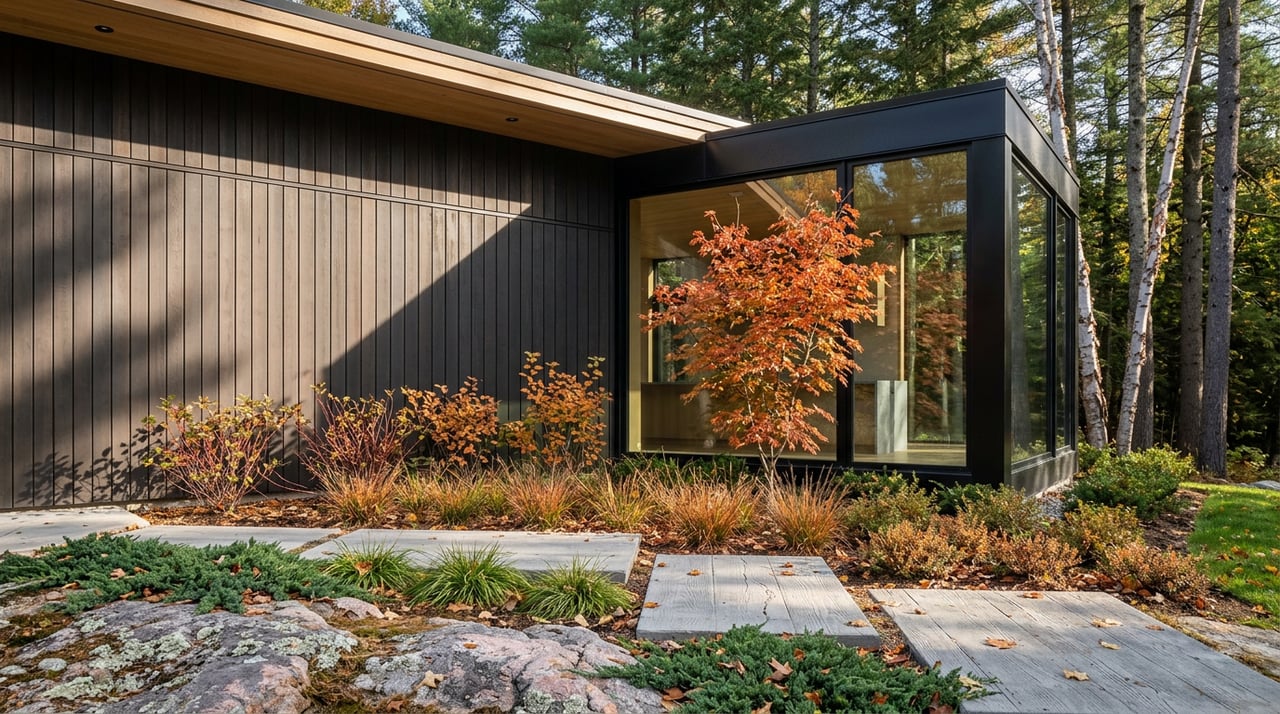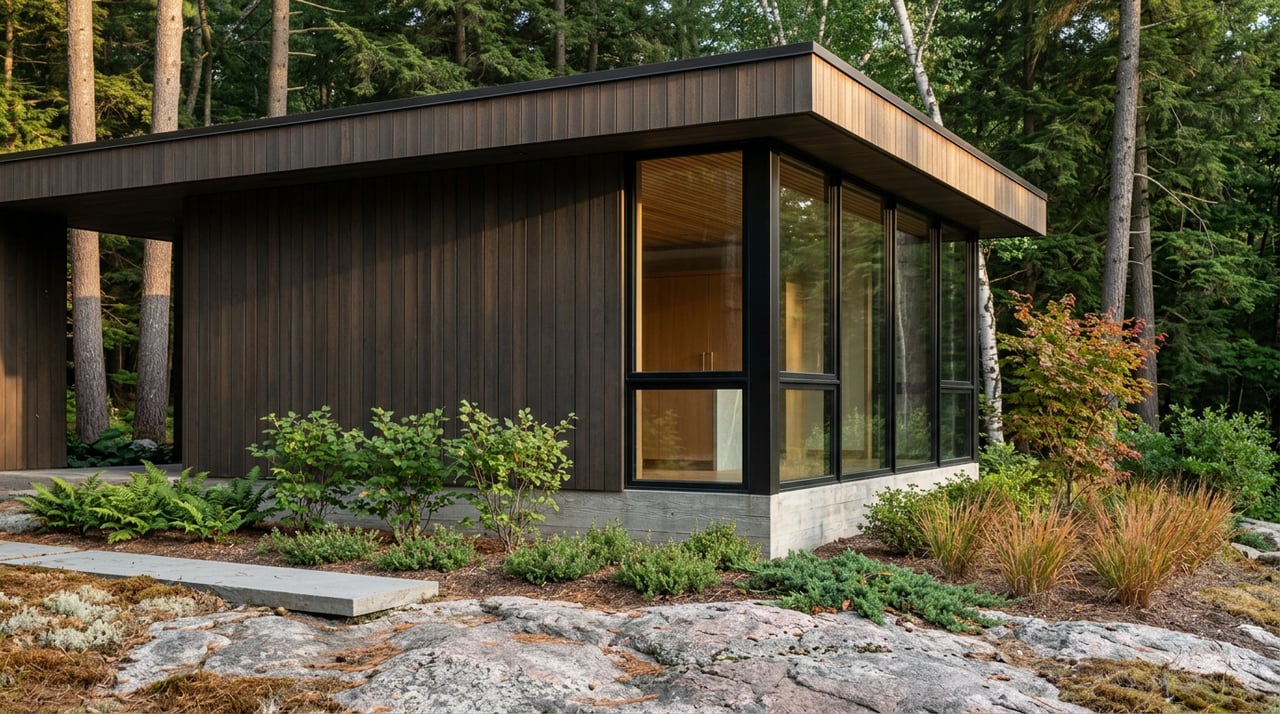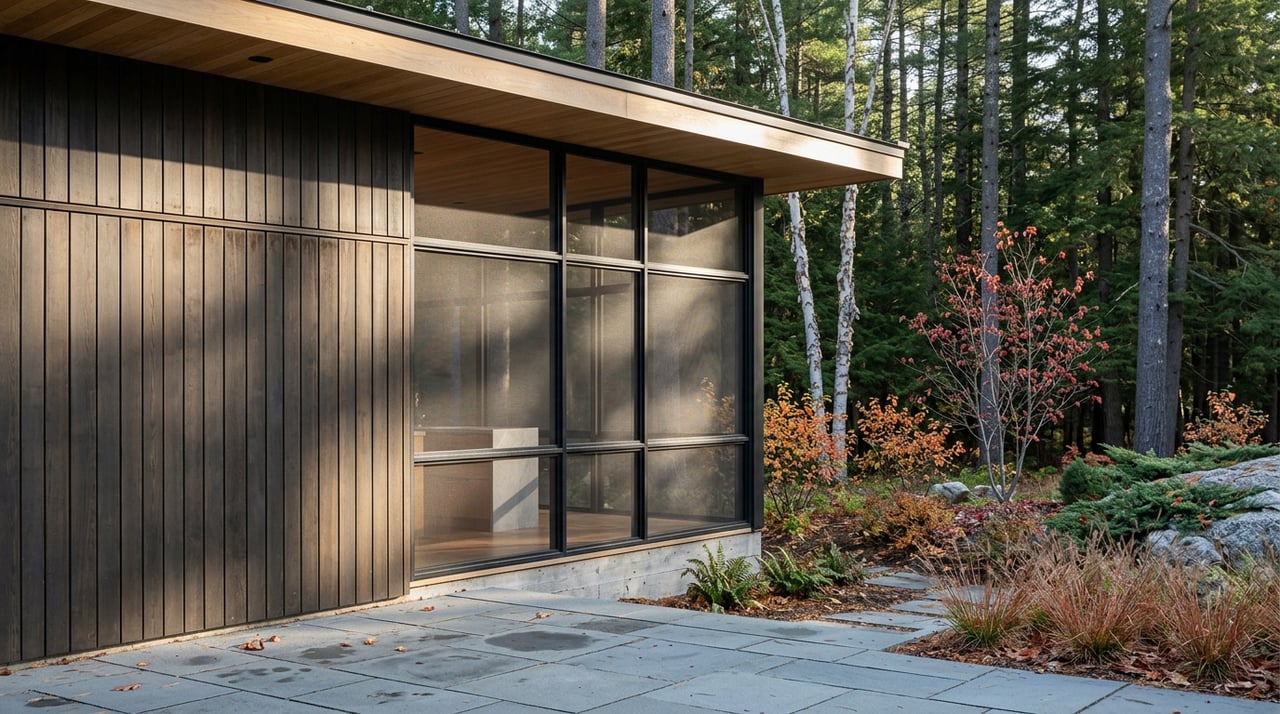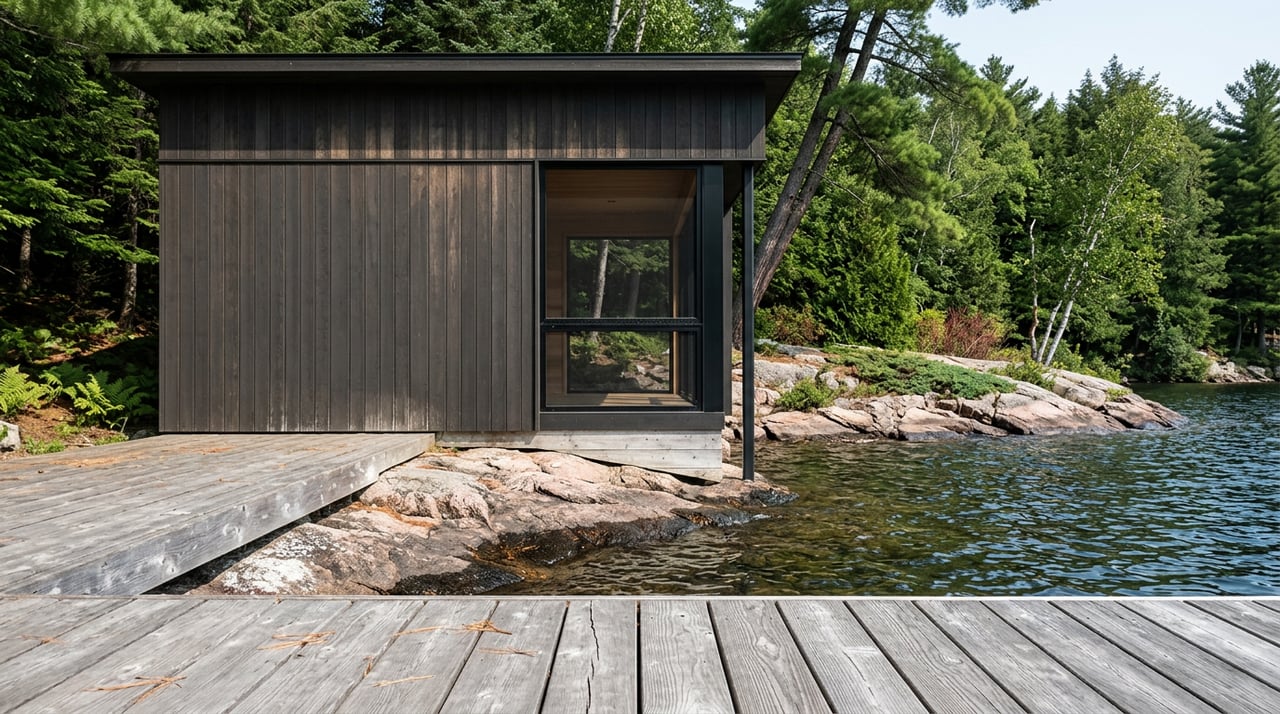
A four-bedroom cottage with serious architecture, generous frontage, and deep clear water on Kennisis Lake trades for roughly $2.2 million. Put the same house on Lake Rosseau and the number clears $5.5 million. That gap isn't a rounding error or the quirk of one unusual sale. It's the standing difference between two lake regions that both sit within about two to three hours of downtown Toronto, share the same Canadian Shield granite, the same spring-fed water systems, and by at least one measurement, better clarity on the Haliburton side.
If you've spent any time comparing these two markets, you've likely already found the headline number: Haliburton waterfront trades at 30 to 45 percent below comparable Muskoka properties, and on the premium lakes that gap widens past 60 percent. What the headline number doesn't tell you is what's actually priced into that difference. It isn't the lake.
The Water Doesn't Explain It
Lake Joseph carries the reputation as the clearest of Muskoka's Big Three, with Secchi disk readings around 6.7 metres and depths reaching 93 metres, mostly fed by spring water that keeps it cold and transparent. It's a genuinely exceptional lake, and the reputation is earned.
But water clarity data from the Haliburton Highlands Water Studies program shows Rockaway Lake recording Secchi readings as deep as 8.3 metres, which is clearer than Lake Joseph's benchmark. Kennisis and Drag Lake carry their own reputations for clarity within the Highlands, and Kennisis ranks among the deepest lakes in the county, the kind of depth that supports lake trout and keeps water cold and stable through summer. Both regions sit on the same bedrock, rely on the same private well and septic infrastructure, and answer to similar shoreline setback rules governing docks, tree removal, and grading near the water.
None of that supports a story where Muskoka's water is meaningfully better than Haliburton's. The physical asset, on average, is close enough that it stops explaining a price difference this large.
The lake isn't what costs the extra three million dollars. The address is.
What's Actually Being Sold
Lake Muskoka, Lake Rosseau, and Lake Joseph connect through the locks at Port Carling, which means an owner on any of the three can cruise to dinner, to golf at The Rock, or to a night at the JW Marriott Rosseau without ever trailering a boat. That system didn't happen last season. Lake Rosseau's own water level was reshaped by engineering as far back as the early 1900s, when the Joe-Rosseau River was blasted open. It's the product of over a century of resort development, marina culture, and generational cottage ownership layered onto three specific lakes until the names themselves became shorthand, Rosseau as "Hollywood North," Joseph as "Billionaires Row."
Haliburton has its own version of interconnected water. Kashagawigamog and its neighboring lakes form a boating chain that runs through Haliburton Village, and Kennisis Lake supports one of the more active cottage associations in the county, the Kennisis Lake Cottage Owners' Association, which runs its own calendar of community events. What that shoreline leads to is different in kind: village shops, art galleries tied to the Haliburton School of Art + Design, a quieter and more down-to-earth cottage culture rather than a private golf club and a five-star resort.
Even the province draws the line between them before a single buyer looks at a listing. Ontario's Ministry of Tourism files Muskoka, Parry Sound, and Algonquin Park under Explorer's Edge, while Haliburton falls under Ontario's Highlands, the province's only entirely rural tourism region, alongside Lanark, Renfrew, and parts of Frontenac, Hastings, and Lennox and Addington. The two markets were sorted into separate categories long before anyone started comparing sale prices.
The Numbers, Side by Side
Pull the current pricing apart and the pattern holds across every tier.
| Market | Typical waterfront price (2026) | Per-foot frontage pricing |
|---|---|---|
| Lake Joseph | average roughly $4.1 million | $15,000 to $30,000 per foot |
| Lake Rosseau | median roughly $3.8 million (2025) | $12,000 to $22,000 per foot |
| Lake Muskoka | average roughly $2.9 million | wide range, from entry-level cottages near Gravenhurst to Millionaires Row estates |
| Haliburton premium lakes (Kennisis, Kashagawigamog, Redstone, Haliburton Lake) | $850,000 to over $3 million | not marketed by the linear foot |
| Haliburton entry point | $350,000 to $500,000, genuine waterfront often $400,000 to $900,000 | not marketed by the linear foot |
That last row matters beyond the price itself. Muskoka's Big Three have been priced by the linear foot long enough that it's now a standard way agents and buyers talk about value there. Haliburton listings simply aren't marketed that way, which is its own small piece of evidence about how differently developed the two markets' infrastructure is, right down to how a listing gets described.
Why the Gap Widens Instead of Closing at the Top
The intuitive expectation is that as build quality standardizes at the highest price points, the gap between two comparable markets should shrink. A $5 million home and a $2 million home might differ meaningfully in finish and scale, but at some point the physical differences flatten out and price should track quality more closely. That isn't what's happening here. The overall discount sits at 30 to 45 percent, but isolate the premium lakes on both sides and the gap widens past 60 percent.
The first half of 2026 shows the same split playing out inside Muskoka's own market. The broader Muskoka waterfront segment, excluding the Big Three, posted a median price of $1,075,000 for the six months ending in June, down from the year before. Over that same window the average price actually climbed, to $1,291,536 from $1,249,721. A falling median alongside a rising average means a small number of higher-priced sales are pulling the average upward even as the typical transaction gets less expensive, which is the signature of a market where the top is holding steady while the middle softens.
The Big Three tell that story even more clearly on their own. 2025 closed with 17 ultra-luxury transactions above $10 million on Lakes Rosseau and Joseph, a record, while Lake Muskoka recorded none at that level. More than half of those top-tier sales never appeared on MLS at all. Meanwhile the $3 million to $5 million entry-luxury segment on both lakes saw real price softening as sellers adjusted post-pandemic expectations. The very top of the market is trading on scarcity and address recognition, not on square footage, which is exactly why the discount widens rather than narrows as price climbs. A brand premium doesn't dilute with size. It compounds.
What This Means for Your Search
If what you actually want is the lake itself, the privacy, the forest, the art scene, four-season stability, then Kennisis or Redstone delivers close to the same physical experience as the Big Three for a fraction of the cost. The 2026 window makes that especially real. Haliburton and the Kawarthas remain among the only markets in the province where a family can still buy genuine waterfront for $400,000 to $900,000, a floor that has largely disappeared elsewhere in Ontario's recreational market.
If what you want includes cruising to dinner at Windermere, a tee time at The Rock, or the specific social currency of being able to say a lake name that every Torontonian recognizes on sight, the premium on Rosseau or Joseph isn't inflated. It's the price of infrastructure and social access that took a century to build and doesn't exist on the Haliburton side at any price.
Neither market is behaving irrationally right now. List-to-sale ratios sit around 93 to 95 percent on the Big Three and roughly 93 percent across Haliburton and the Kawarthas outlying lakes as of mid-2026, which means buyers in both regions are paying close to what sellers are asking. This is an orderly, disciplined market on both sides of the county line, not a fire sale on one end and a bidding war on the other. The discount is structural. It's not a sign that Haliburton is distressed or that Muskoka is overpriced.
A Few Questions Worth Asking Before You Choose
Does the Haliburton discount signal a riskier market? Not based on how the two markets are actually trading. Sale-to-list ratios are close across both regions in 2026, which points to price discipline rather than desperation on the Haliburton side.
Will the gap close over time? The pattern has held across market cycles for a reason rooted in decades of built infrastructure and name recognition rather than a temporary supply imbalance. That kind of gap doesn't tend to close quickly, because the thing producing it isn't a pricing inefficiency waiting to correct.
Is the water quality comparison too simple? Individual lakes vary on both sides of the county line, and no one should assume every Haliburton lake beats every Muskoka lake on clarity. The point isn't that Haliburton always wins on water. It's that the label "Muskoka" doesn't reliably predict better water than the label "Haliburton," which is exactly why the price gap has to come from somewhere other than the lake itself.
If you're weighing a Kennisis or Redstone property against something on Rosseau or Joseph, that trade-off is worth walking through property by property, not just region by region. Birchwood Real Estate works both sides of that line, from Toronto to the Haliburton and Muskoka waterfronts, and can help you figure out exactly what a given price difference is and isn't buying you before you commit to either.