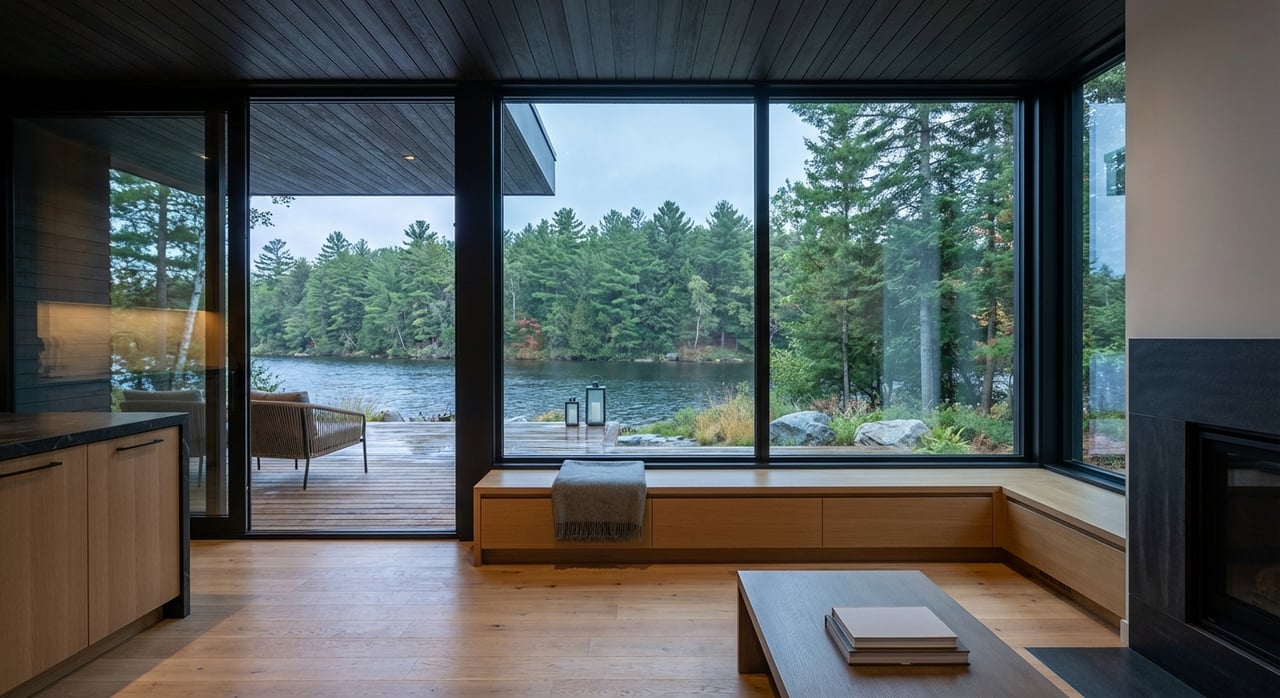
Thinking about offsetting your cottage costs by renting on Muskoka’s lakes? You are not alone, and the demand is real. The market is active and seasonal, and local rules now shape what you can earn and when. In this guide, you will see the data that matters, the licensing basics to know, and a simple due‑diligence checklist to help you underwrite with confidence. Let’s dive in.
Muskoka STR at a glance
Muskoka’s short‑term rental market is large and highly seasonal. Market benchmarks show about 2,636 active listings, annualized occupancy near 45 percent, an average daily rate around $493, RevPAR near $218, and typical annual revenue per active listing of about $27,200. These are averages, not ceilings. Waterfront cottages with the right features often outperform in summer and lag in winter. AirDNA’s Muskoka overview is a good reference point.
Supply is dominated by entire‑home listings, roughly 96 percent of the market. Channel mix leans to Airbnb at about 52 percent, Vrbo around 10 percent, and the rest operating across multiple channels. Bedrooms skew to 3–5+, which lines up with group and family demand. You should evaluate comps with similar bedroom counts and amenities on the same lake for the best read.
Seasonality and pricing strategy
Peak demand runs late June through August. Shoulder seasons and winter are thinner, which means a few peak months can drive a large share of your annual revenue. Do not model a flat annual occupancy. Use a monthly curve for occupancy and rate.
A practical approach is to forecast month by month. Start with AirDNA market curves, then refine with local comps and any verified property history. Many listings run 2–3 night minimums, and booking windows vary, so your pricing and stay rules should reflect actual lead times and turnover costs.
What drives bookings on the lakes
Guest priorities are consistent across Muskoka’s lakes:
- Waterfront access and safe dockage for boating and swimming
- 3–5+ comfortable bedrooms for families and groups
- Modern kitchen, strong Wi‑Fi, and reliable utilities
- Outdoor living spaces like decks, BBQ, and a well‑designed firepit
Market data shows high prevalence of core amenities such as parking, full kitchens, and internet. Entire‑home listings dominate, so your presentation and design details can be the tie‑breaker. Thoughtful photography, clear house rules, and quick host responses help convert at higher rates during peak weeks. See market basics in AirDNA’s Muskoka data.
Rules you must know
Municipal rules in Muskoka now shape capacity, occupancy, and allowable nights. Requirements vary by municipality and are regularly updated, so confirm details directly with the townships and review timelines from FOCA’s STR resource page.
Township of Muskoka Lakes
Muskoka Lakes operates a licensing program for Short‑Term Rental Accommodations. The by‑law requires a licence to advertise and operate, mandates displaying the licence number on listings, and ties occupancy limits to bedroom count and septic capacity. Beginning May 1, 2026, certain waterfront zones carry summer rules that require a seven‑night rental break in each of June, July, and August, and limit bookings so only one rental group may occupy a premises for each six consecutive nights during the peak period from the Friday before Victoria Day to the Tuesday after Labour Day. Review the Township’s program and enforcement details on the Muskoka Lakes STR page.
Town of Bracebridge
Bracebridge requires annual STR licences with inspections and a demerit system. The published licence fee is about $1,500 per year. Applications typically include insurance certificates, floor and site plans, and safety sign‑offs. See the Bracebridge STR page for current requirements.
Town of Huntsville
Huntsville runs an STR licensing program with a Municipal Accommodation Tax. Recent changes added a one‑year ownership requirement before STR use, and a licence cap of 250 issued first‑come, first‑served. The town publishes fee schedules, inspections, and a 24‑hour hotline for complaints. Details are posted on the Huntsville STR licensing page.
Georgian Bay Township and Lake of Bays
Georgian Bay Township requires STR registration with annual renewals, safety and occupancy standards, and documentation. Lake of Bays operates a licensing framework and has considered or implemented a Municipal Accommodation Tax depending on council decisions. These local variations are common in Muskoka. Review your municipality’s current rules, starting with Georgian Bay’s STR page.
Municipal Accommodation Tax
A Municipal Accommodation Tax is common across Muskoka at around 4 percent, but timing and adoption differ by municipality. This impacts your net receipts and should be modeled. For examples and context, review the Bracebridge MAT FAQs and confirm current status in each township.
How to underwrite a Muskoka cottage
Strong underwriting pairs market averages with local, verified data. Ask for 24–36 months of monthly performance and cross‑check with reputable market sources.
- Verified nightly revenues and occupancy by month for 24–36 months. Compare to market ADR and occupancy to see seasonality and recovery from anomalies. Use AirDNA benchmarks for Muskoka as a reference.
- ADR by month and by channel. ADR times occupancy equals RevPAR. See a quick explainer on ADR from Investopedia.
- RevPAR or revenue per available night by month or quarter. Industry reporting on pricing and booking trends, like VRMintel’s coverage, can help frame what to track.
- Average length of stay and minimum‑stay policy history. This shapes cleaning costs and revenue mix between weekends and full weeks.
- Booking lead time and booking curve. Pricing and cancellation exposure depend on how far out guests book.
- Channel mix. OTA fees vary, and direct bookings can reduce commissions but change your marketing needs.
- 3–5 local comps on the same lake with similar bedrooms and amenities, and the last 12 months of occupancy and rate.
- Full expense detail. Include cleaning, management fees, utilities, insurance, waste disposal, septic maintenance, winterization, dock work, and taxes including any MAT.
- Compliance evidence. Licence or registration number, inspection reports, insurance certificates, and septic or water records if applicable. Many municipalities require your licence number on all advertisements. See Muskoka Lakes guidance here.
- Complaints or enforcement history. Repeated events can risk suspension. Bracebridge outlines demerits and revocation triggers on its STR page.
- Capital expenditures. Docks, roofs, HVAC, septic work, and boathouse projects can be lumpy, so plan reserves.
For data validation, pair vendor dashboards with reconciled owner payout statements or property manager exports. Many municipalities publish STR registries or maps to confirm licence numbers, which adds confidence to your file.
Operations and cost drivers to model
Operating a waterfront STR is hands‑on. Model cleaning and laundry per turnover, seasonal maintenance, dock repairs, firewood, and winterization. Insurance can be higher than urban STRs, and most municipalities require proof of short‑term rental coverage.
Licence and inspection fees vary. Muskoka Lakes lists fees that vary by zoning, with examples such as $1,000 for waterfront or R4 zones and $500 for other zones. Bracebridge’s published licence fee is about $1,500 and additional inspection fees may apply. Huntsville’s schedule varies by principal versus secondary residence. Review current schedules for Muskoka Lakes, Bracebridge, and Huntsville.
Septic and private water systems matter. Municipalities can tie headcount to septic capacity, and pump‑out or maintenance records may be requested during licence review. Some areas treat rentals on private supplies as small drinking water systems, which can trigger testing and reporting. Start with the Township guidance on Muskoka Lakes’ STR page.
Waste and parking plans are common application items. Many towns require a site plan with parking counts and a documented garbage disposal approach. Huntsville’s process describes these needs on its licensing page.
Red flags to watch for
- Steep declines in bookings without a clear seasonal or macro explanation
- Inability or refusal to provide reconciled income or manager reports
- Listings that lack a required municipal licence number
- A history of fines or multiple enforcement complaints
- Revenue that is overly concentrated in a single month or event without a plan to spread demand
These are solvable in some cases, but they should feed your downside scenarios. Municipal pages describe complaint and demerit systems so you can quantify risk.
Building a realistic revenue model
Use a monthly grid. Start with market ADR and occupancy by month, then replace those assumptions with property‑specific data once you receive it. Reflect minimum‑stay settings, cleaning fees, and channel commissions by channel. Add MAT where it applies and reduce net revenue accordingly. Finally, run low, base, and high scenarios to see how licensing limits, seasonality, and operating hiccups affect cash flow.
When a property stands out
Design, privacy, and waterfront function separate the top performers. Cottages with thoughtful architecture, high‑quality kitchens and baths, well‑planned sleeping for groups, and dialed‑in outdoor living tend to earn more in peak season. Strong photography, clear guest resources like a Renter’s Information Package, and responsive service improve reviews and conversion.
Your next step
If you are weighing a Muskoka purchase that will double as a short‑term rental, bring the market data, the municipal rules, and a clean operating plan together before you offer. A focused pre‑acquisition review can protect your upside during summer and your downside the rest of the year.
If you want a second set of eyes on a target property or need help shaping a design‑forward listing and revenue plan, connect with Ryan Harkin. Our hospitality‑led approach pairs on‑the‑ground Muskoka knowledge with boutique marketing to position your cottage for peak‑season success.
FAQs
What are typical earnings for a Muskoka short‑term rental?
- Market averages suggest about $27,200 in annual revenue per active listing, with an ADR near $493 and occupancy around 45 percent, but performance varies widely by lake, features, and compliance. See AirDNA’s Muskoka data for context.
How seasonal is demand on Muskoka lakes?
- Very seasonal, with a strong summer peak from late June through August and thinner shoulder and winter months, so you should model month by month rather than using a flat annual rate.
Do I need a licence to operate a short‑term rental in Muskoka?
- Many municipalities require licensing or registration, inspections, and display of a licence number on listings, with enforcement for non‑compliance. Start with your township’s page, such as Muskoka Lakes or Bracebridge.
What special rules apply on Muskoka Lakes waterfront properties?
- In certain zones, summer rules require a seven‑night rental break in each of June, July, and August, and limit bookings so only one rental group may occupy a premises for each six consecutive nights during the peak period. See the Township’s STR page.
How does the Municipal Accommodation Tax affect net revenue?
- A MAT of about 4 percent is common in the region, but timing and adoption differ by municipality, so confirm local rules and model the tax in your net receipts. For examples, review Bracebridge MAT FAQs.
What underwriting documents should I request from a seller or manager?
- Ask for 24–36 months of monthly revenues, ADR and occupancy, channel mix, ALOS, booking lead times, 3–5 local comps, full expense detail, licence and inspection records, and any complaint history, then compare to AirDNA benchmarks.
Are there septic or water requirements for cottage rentals?
- Many municipalities tie occupancy to septic capacity and may request pump‑out or maintenance records, and some areas treat private supplies as small drinking water systems with testing and reporting. Start with Muskoka Lakes’ guidance.