If you are choosing between direct waterfront and a back-lot property in Muskoka, you are really choosing how you want to live at the lake. For some buyers, stepping from the deck to the dock is the whole point. For others, a quieter setting, easier road access, and a more measured price matter more. This guide will help you compare waterfront, across-the-road, and back-lot ownership in Muskoka so you can focus on the option that fits your lifestyle and goals. Let’s dive in.
Understanding Muskoka Property Types
In Muskoka Lakes Township, water access plays a major role in how properties are viewed and valued. The township sits on the southern Canadian Shield and includes 80 lakes, with Lakes Muskoka, Rosseau, and Joseph among the best known.
Local zoning draws an important distinction between waterfront residential properties and back-lot water access properties. District planning language describes back lots as homes near the shoreline but physically separated from it by waterfront-front lots, with access typically coming from roads that run parallel or perpendicular to the shore.
There is also a middle-ground scenario that many buyers consider: across-the-road ownership. While not the same as direct waterfront, it can still offer a strong connection to the lake, just with the home separated from the shoreline by a road.
Direct Waterfront Ownership
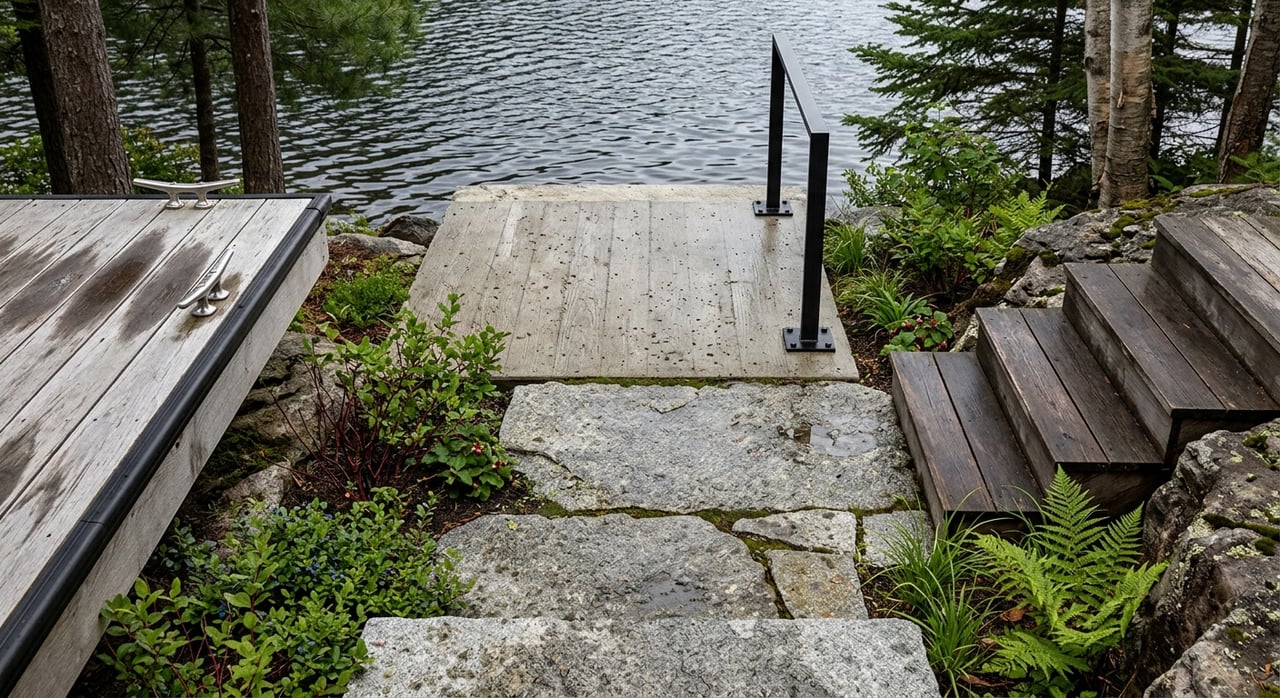
Direct waterfront ownership is usually the clearest fit if the shoreline is central to how you want to use Muskoka. If swimming, docking, paddling, and lakeside entertaining are part of your daily picture, this option gives you the shortest path between the house and the water.
That convenience often comes with more shoreline-related considerations. In Muskoka Lakes, waterfront lots are subject to shoreline buffers and setbacks measured from the high-water mark, and the township also handles matters such as dock permits, wells, and septic systems.
Another point worth understanding is that “waterfront” does not always mean every strip to the water is owned exactly as a buyer might assume. The Township of Muskoka Lakes administers the sale of original shore road allowances, which means shoreline title and shoreline use are not always identical.
Why Buyers Choose Waterfront
Buyers often prefer direct waterfront when they want:
- Immediate water access
- Space for docks or shoreline use, where permitted
- A stronger lakeside living experience
- A property that aligns with the classic Muskoka cottage lifestyle
What to Review Carefully
Before you buy direct waterfront, pay close attention to:
- The exact legal route to the shoreline
- Whether a shore road allowance affects ownership
- Shoreline setbacks and buffers
- Dock and shoreline improvement requirements
- Well and septic considerations
Across-the-Road Ownership
Across-the-road ownership can be a smart compromise if you want a meaningful relationship to the lake without taking on the full cost or intensity of direct shoreline ownership. In practical terms, this type of property often sits between true waterfront and inland ownership.
You may still enjoy views, proximity, and regular access to the water, but there is usually less spontaneity than with direct waterfront. Crossing a road changes how the property feels day to day, especially if you picture carrying paddleboards, walking children to the dock, or heading down for a quick swim.
For many buyers, though, this balance makes sense. It can preserve a lake-oriented lifestyle while reducing some of the maintenance and planning complexity that often comes with being right on the shoreline.
Back-Lot Ownership
Back-lot ownership usually appeals to buyers who want Muskoka as a road-friendly, lower-intensity retreat. District planning-policy language notes that back lots front on and gain access from publicly owned, year-round maintained roads.
That road-based access can make a meaningful difference if you expect to use the property beyond peak summer weekends. Shoulder-season visits and winter access can feel more straightforward when your day-to-day arrival does not depend on shoreline positioning.
Back-lot properties can also appeal to buyers who prioritize privacy. Because the home is physically separated from the shoreline, the experience can feel calmer and less exposed to lake activity, while still keeping you connected to the broader Muskoka setting.
Why Buyers Choose Back Lots
Back-lot buyers often value:
- Easier road-based access
- More privacy in day-to-day living
- A quieter setting away from the shoreline edge
- A more budget-conscious entry into Muskoka ownership
Comparing Lifestyle Fit
The best property type often comes down to how you actually plan to use your time here. It is easy to imagine a full waterfront lifestyle, but your long-term satisfaction usually depends on whether that vision matches your real habits.
If your ideal day revolves around the dock, swimming, sunset lounging, and launching the boat without any friction, direct waterfront may be worth the premium. If you want lake proximity but do not need to be on the shoreline every moment, across-the-road can feel like a practical middle ground.
If you are seeking a private cottage base with simpler road access and are comfortable with a short walk or drive to the water, a back-lot property may offer the strongest fit. In Muskoka, the right choice is often about realistic use, not aspirational use.
Budget and Market Position
The Muskoka market shows a clear premium for waterfront property. In Q1 2026, public market data for Muskoka & Area reported a median price of $775,000 for waterfront sales compared with $544,500 for non-waterfront sales.
Regional sales volume also shows that waterfront is the smaller segment of the market. In 2025, the broader Lakelands region recorded 1,265 waterfront sales and 4,595 non-waterfront sales.
What the public data does not do is isolate back-lot homes as their own reported category. That means price comparisons for across-the-road or back-lot properties should be treated as qualitative rather than as a firm board-reported pricing band.
What This Means for You
In simple terms, the market clearly assigns value to shoreline access. But the actual premium or discount for a specific property depends on details such as:
- Access type
- Shoreline position
- Privacy
- Improvements and presentation
- How well the property matches buyer expectations
Resale Considerations
Resale value in Muskoka is not just about whether a property touches the water. It is also about whether the property clearly delivers the experience the next buyer wants.
Direct waterfront tends to attract buyers who want the full cottage experience. Across-the-road ownership can appeal to buyers who want some water connection without paying for the most shoreline-intensive position. Back-lot ownership often attracts buyers looking for value, privacy, and practical access.
That is why clarity matters. A property tends to present better in the market when its access, shoreline rights, and lifestyle proposition are easy for buyers to understand.
Questions to Ask Before You Buy
Before choosing between waterfront and back-lot ownership in Muskoka, take time to answer a few practical questions. These can shape both your enjoyment and your confidence in the purchase.
How close is the water really?
Ask about the actual route to the shoreline, not just the general description. Planning distinctions matter here because back lots are physically separated from the shoreline and may rely on road-based access.
What kind of access is included?
Find out whether access is private, shared, deeded, or governed by an easement or right-of-way. In Ontario, a registered easement is materially different from informal permission.
Is there a shore road allowance?
In Muskoka Lakes, shore road allowance transactions are handled by the township. That means the legal edge of ownership can matter even on a property described as waterfront.
What shoreline features matter most?
Think about how you will actually use the property. Your priorities may include a dock, a swimming area, sunset exposure, boathouse potential, or simply a view.
Choosing the Best Fit for Your Muskoka Goals
A well-chosen Muskoka property should support the way you want to spend your time, not just the way you imagine it in a listing photo. Waterfront offers immediacy and a classic lakeside rhythm. Across-the-road ownership gives you proximity with a lighter shoreline commitment. Back-lot ownership can deliver privacy, road convenience, and stronger value.
If you are weighing the tradeoffs between access, maintenance, price, and resale, a local, detail-driven comparison can make the decision much clearer. If you are considering a Muskoka property and want help evaluating which ownership style aligns with your lifestyle and long-term plans, connect with Ryan Harkin.
FAQs
What is the difference between waterfront and back-lot ownership in Muskoka?
- Waterfront ownership places the property on the shoreline, while back-lot ownership refers to homes near the water but physically separated from the shoreline by waterfront-front lots.
Are all Muskoka waterfront properties owned right to the water’s edge?
- Not always. In Muskoka Lakes, shore road allowances can affect the exact legal edge of ownership, so shoreline title and shoreline use are not always identical.
Is across-the-road ownership considered waterfront in Muskoka?
- Across-the-road ownership is generally best viewed as a separate lake-oriented category rather than the same as direct waterfront, because the home is separated from the shoreline by a road.
Do waterfront properties in Muskoka have more regulations?
- Waterfront lots in Muskoka Lakes are subject to shoreline buffers and setbacks measured from the high-water mark, and shoreline improvements such as docks may involve township permitting.
Are back-lot properties in Muskoka easier to use year-round?
- They can be, because district planning language notes that back lots front on and gain access from publicly owned, year-round maintained roads.
Is waterfront always the better investment in Muskoka?
- Waterfront is the more premium market segment based on public sales data, but the better choice depends on how well the property matches the lifestyle and use the next buyer wants.