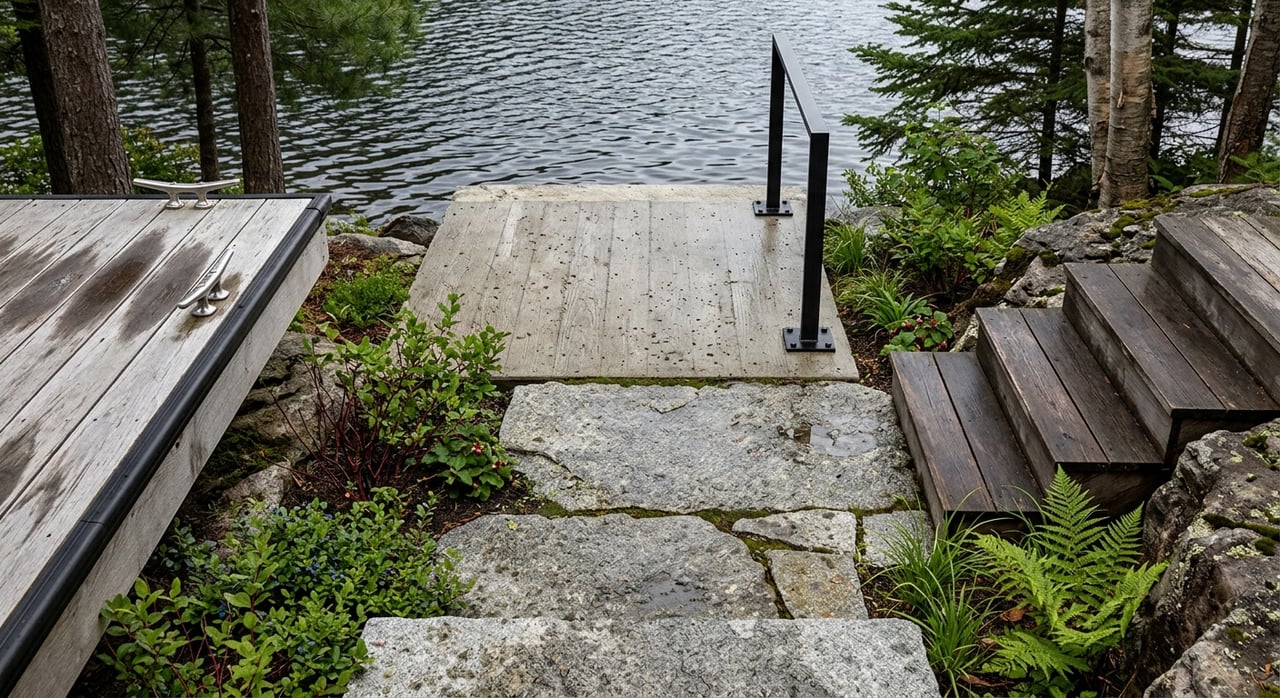
If you are shopping for a waterfront property in Haliburton, one detail can shape your experience as much as the home itself: how you actually access the lake. A beautiful cottage, clean design, and a great view can all feel very different once you understand whether the shoreline is privately owned, shared with others, or reached through a registered right. When you know what each setup means, you can make a more confident decision and avoid surprises later. Let’s dive in.
Why lake access matters in Haliburton
Haliburton County is home to more than 600 lakes, so waterfront and near-water properties are a major part of the local market. In this setting, buyers are not just evaluating square footage, finishes, or views. You are also evaluating the legal and physical relationship between the property and the shoreline.
That matters because two homes can look similar in a listing, yet offer very different ownership rights and day-to-day use. One may include private shoreline, while another may be separated from the water by a township-owned shore road allowance or rely on shared or registered access. In a market where waterfront supply is finite, those differences can affect convenience, privacy, and long-term value.
Direct frontage explained
Direct frontage usually means the lot has its own private shoreline. For many buyers, this is the clearest and simplest arrangement because your relationship to the lake is more straightforward on a daily basis.
Still, direct frontage does not always mean the owner holds title right to the water’s edge without exception. In Haliburton, a shore road allowance may sit between the main lot and the lake. The County describes a shore road allowance as a 20-metre, or 66-foot, strip measured from the water’s edge, and unless that title has been purchased, it remains township-owned.
This is why it is important to read beyond listing language. A property may be described in a way that sounds like true waterfront, but the legal description and survey are what clarify whether you own the shoreline itself or are separated from it by a public strip.
Shared access explained
Shared access usually means multiple owners use the same shoreline feature or lake access point. That could include a shared dock, beach area, path, or separate lakefront lot.
For some buyers, shared access can work well, especially if the arrangement is clear and well maintained. But it usually means less exclusivity and more coordination. You will want to understand who can use the shoreline, where boats are stored, whether parking is limited, and how upkeep costs are handled.
In these cases, the paperwork matters more than the marketing copy. Ontario’s land registration system records legal interests in land, so the strength of a shared access arrangement depends on the governing documents behind it. If the rights and responsibilities are vague, the experience can be too.
Registered rights and easements
Some Haliburton properties access the lake through a registered right, such as an easement or right of way. In practical terms, this means your access is legally secured by a registered interest rather than direct shoreline ownership.
Ontario guidance notes that documents may refer to either a right of way or an easement, and that an easement is a right or interest attached to land. Rights of entry are also treated as easements and must clearly identify the land that benefits from that right.
This type of structure can work very well when it is properly documented. But as with shared access, the exact wording matters. You want to know where the access runs, what uses are allowed, whether docking is included, and whether the right is broad enough for the way you intend to use the property.
How each option affects daily use
The practical difference between access types often comes down to ease, privacy, and predictability. Direct frontage usually gives you the most private and seamless experience, but it still comes with local shoreline rules. Shared access and registered-rights properties can still be excellent options, though they typically involve more reliance on agreements and more coordination with others.
Here is a simple comparison:
| Access type | What it usually means | What to think about |
|---|---|---|
| Direct frontage | Private lot with shoreline relationship that is usually the most straightforward | Confirm title, survey, and whether a shore road allowance is present |
| Shared access | Multiple owners use the same lake feature or access area | Review usage rules, maintenance responsibilities, parking, and storage |
| Registered right | Lake access secured through an easement or right of way | Verify the exact legal wording and the scope of permitted use |
Shoreline rules still apply
Owning waterfront in Haliburton does not mean unlimited freedom to change the shoreline. The County’s shoreline policies are designed to balance owner use, lake health, and natural aesthetics.
The Shoreline Preservation By-law applies within 20 metres of the water in Algonquin Highlands, Highlands East, and Minden Hills. Dysart et al has a separate tree preservation by-law that applies within 30 metres. The Official Plan also calls for a 30-metre setback from the high-water mark on new lots created after 2017 and limits shoreline disturbance near the water.
For buyers, this means the value of a property is not just in the access itself, but in understanding what you can and cannot do near the shoreline. If you are imagining future improvements, tree work, or site changes, this should be part of your review early in the process.
Why access clarity matters for resale
Haliburton’s market shows why secure and well-documented lake access matters. The County’s 2025 Growth Study reported average single-family waterfront prices rising from $352,000 in 2013 to $974,000 in 2024 year-to-date. Over the same period, average non-waterfront home prices rose from $139,000 to $431,000.
That does not mean every form of lake access carries the same value, or that there is one standard premium for all waterfront-adjacent properties. It does suggest, however, that in a market with finite waterfront supply, buyers tend to place meaningful value on clarity. Secure access supported by strong documentation is generally easier to understand, use, and evaluate than an informal arrangement.
What to verify before you offer
Before you move forward on a Haliburton property with any form of lake access, it helps to review a few key items carefully. This is where a thoughtful buying process can protect both your experience and your investment.
Start with the basics:
- Confirm the exact legal description of the property
- Ask whether the lot owns the shoreline or is separated by a shore road allowance
- Have a lawyer review whether access is by ownership, easement, right of way, licence, or informal permission
- Review any survey or plan that shows the relationship between the lot and the water
- Clarify whether any dock, path, beach area, or storage area is private or shared
It is also worth confirming the high-water mark. Haliburton County states that this line can only be officially indicated by an Ontario Land Surveyor or on a Plan of Survey.
If you are planning any work near the shoreline, check whether the property falls under Shoreline Preservation By-law 4169 or, in Dysart et al, the Shoreline Tree Preservation By-law. And if a listing uses terms like deeded access, shared waterfront, or right of way, the safest approach is simple: read the title documents, not just the ad copy.
A smarter way to evaluate waterfront lifestyle
In Haliburton, lake access is not a minor technical detail. It is part of the lifestyle, part of the ownership experience, and often part of the long-term value story. The best property for you depends on how you plan to use it, how much privacy you want, and how comfortable you are with shared or registered arrangements.
When you understand the difference between direct frontage, shared access, and registered rights, you can compare properties more clearly and ask better questions before you commit. That kind of clarity is especially valuable in a market where waterfront is limited and every shoreline relationship is a little different.
If you are exploring waterfront or water-access properties in Haliburton and want a clear read on what a listing really offers, Ryan Harkin can help you evaluate the details with care and confidence.
FAQs
What does direct frontage mean for a Haliburton property?
- Direct frontage usually means the property has its own private shoreline, though you should still confirm title and check whether a shore road allowance separates the lot from the lake.
What is a shore road allowance in Haliburton?
- A shore road allowance is a 20-metre strip measured from the water’s edge that remains township-owned unless its title has been purchased.
What should you check on a shared waterfront property in Haliburton?
- You should review who can use the shoreline features, how maintenance is handled, whether parking or boat storage is limited, and what the legal documents actually grant.
What is the difference between an easement and a right of way for lake access?
- In Ontario, lake access may be secured by a registered easement or right of way, and the important point is that the legal documents clearly identify the benefiting land and the permitted use.
How do shoreline by-laws affect waterfront property in Haliburton?
- Local by-laws can regulate vegetation removal, grading, fill, tree preservation, and other work near the water, so buyers should confirm what rules apply before planning changes.
Why does lake access clarity matter when buying in Haliburton?
- Clear, well-documented access helps you understand how you can use the property now and can support stronger confidence around long-term enjoyment and resale.