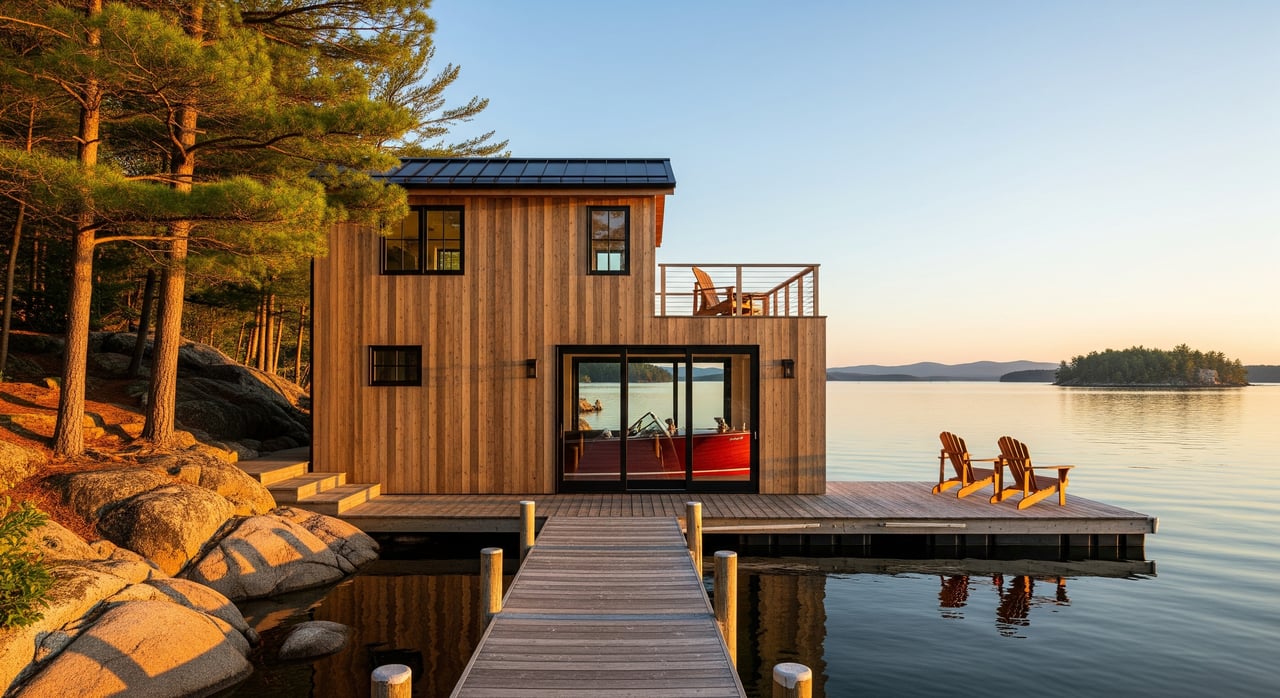
Love the lake but unsure which boathouse fits your Muskoka life? With so many slip counts, rooflines, and support systems, it can be hard to picture how each choice affects daily use, maintenance, and resale. You want effortless days on the water and a shoreline that looks as good as it functions. In this guide, you’ll learn the main boathouse types, how each one shapes lifestyle and value, and what to check for permits and environmental rules before you buy. Let’s dive in.
Common boathouse types
Slip count and layout
- Single-slip: Compact footprint for one boat, often paired with a side dock. Good for simple storage and lower visual impact.
- Double-slip: Two boats under one roof for families with multiple craft or frequent guests. Larger roof or sundeck potential, stronger shoreline presence.
- Multi-slip or with extra storage: Additional bays for water toys or gear. More common on larger lots and subject to size limits and local bylaws.
Height and roof design
- Single-storey enclosed: Boat storage only. Clean lines, straightforward function.
- Two-storey: Ground-level slips with an upper-level area. Many municipalities limit enclosed upper use; open sundecks are more commonly permitted with restrictions.
- Flat-roof sundecks: Popular for views and entertaining. Require guardrails, proper access, and quality waterproofing.
- Pitched-roof: Classic cottage profile with lower rooftop usability but strong traditional appeal.
Structural support systems
- Pile-supported: Driven or helical piles provide a stable, elevated structure. Works well where lakebeds accept piling and wave action is moderate.
- Crib (rock-filled): Historic method using timber frames filled with rock. Solid feel but greater bottom disturbance.
- Floating: Supported by floats for adaptability to water-level changes. May follow different permit pathways.
- Hybrid: Mix of piles and floats for stability plus seasonal flexibility.
Materials and finishes
- Timber: Warm, traditional Muskoka look. Needs regular staining and rot control.
- Steel/metal: Durable frames and long-life roofing. A more contemporary look.
- Composite decking: Low-maintenance walking surfaces at a higher upfront cost.
- Roofing: Asphalt shingles, metal, or membrane systems on flats. Flat roofs need careful waterproofing.
Built-in features
- Boat lifts, ladders, cleats, and fendering for safe docking.
- Electrical and lighting that meet code and inspection standards.
- Storage lockers and, where allowed, upper sundecks or screened rooms.
Lifestyle and value decisions
Your boathouse choice should reflect how you use the lake.
- Entertaining vs storage: If hosting is a priority, you’ll value generous sundecks, safe circulation, and easy water access. If storage and performance matter most, look at slip count, interior clearance, and lift capacity.
- Seasonal realities: Floating structures adapt to water-level shifts. Pile or crib options feel more permanent and substantial.
- Privacy and sightlines: Upper decks can elevate views and social space but may affect neighbor sightlines. Placement and height shape how private the waterfront feels.
On resale, buyers in Muskoka often want a balance: secure, legal storage plus tasteful deck space. Well-maintained, compliant boathouses with safe slips and quality lifts tend to enhance appeal. By contrast, non-compliant enclosures or visibly weathered structures can limit your buyer pool and impact value.
Permits and rules in Muskoka
Boathouse approvals are layered. You’ll encounter municipal bylaws, district planning, and provincial and federal oversight. Before you commit, verify what exists today and what is allowed going forward.
- Start with the District Municipality of Muskoka planning and building resources for an overview of processes and contacts. The district site is a reliable gateway to local requirements and departments. Visit the District Municipality of Muskoka planning and building resources.
- Then check the local municipality for site-specific bylaws on size, slip count, height, setbacks, and upper-storey use. Explore the Township of Muskoka Lakes building and planning pages, the Town of Bracebridge planning resources, or the Town of Gravenhurst planning resources.
- Provincial involvement can apply where public lands or shoreline programs are affected. See the Ontario Ministry of Natural Resources and Forestry for policy context.
- Federal reviews may be needed for fish habitat or navigation. Review guidance from Fisheries and Oceans Canada and Transport Canada’s navigable waters information.
Many Muskoka municipalities prohibit residential occupancy in boathouses and impose limits on enclosed upper floors. Open sundecks are often permitted with size and railing rules. Always confirm current bylaws and permits with the local building and planning departments.
Environmental stewardship
Muskoka’s shoreline is sensitive, and buyers are expected to be good stewards.
- Natural vegetation buffers are encouraged to protect water quality and habitat.
- Cribbing and infill can disturb the lakebed and may face added scrutiny.
- Clean and inspect boats and equipment to avoid spreading invasive species.
For best practices and community expectations, consult the Muskoka Conservancy, Muskoka Watershed Council, and the Federation of Ontario Cottagers’ Associations.
How to evaluate a boathouse on tour
Use this quick, buyer-friendly checklist to assess condition and presentation.
- Overall presentation: Does it complement the cottage and landscape? Note fading finishes, rot, or rust.
- Roof and sundeck: Look for pooling water, sagging, missing flashing, or loose shingles. Confirm railings are present and feel sturdy.
- Structure and supports: Check pilings for leaning or corrosion. Walk decking to feel for spongy spots. For crib bases, scan for erosion or displaced rock.
- Waterline cues: Staining above normal level suggests high-water events. Note unusual algae or plant buildup.
- Mechanical and electrical: Inspect lift condition and look for exposed or makeshift wiring.
- Access and safety: Ensure safe steps or ramps, clear circulation, and ladders for water access.
- Mooring gear: Confirm cleats, fenders, and bumpers are adequate and well placed.
- Shoreline: Observe vegetation buffers, any seawalls or rip-rap, and signs of recent infill.
Smart questions to ask
- Are permits and final inspections on file for the current structure and any upgrades?
- Has the boathouse ever been used as living space or modified beyond permitted use?
- Are there active orders or bylaw issues on the property?
- What are the lift capacities and are they permitted for your boat size?
- Who maintains the boathouse and is there a maintenance history?
- Have there been shoreline stabilization or remediation efforts?
- Any related insurance claims for water or structural damage?
Red flags that need pros
- No documentation for visible structural work, especially added upper decks or enclosures.
- Signs of movement, like leaning piles or sagging floors.
- Enclosed upper areas used for sleeping or living.
- Major rot or corrosion in primary supports.
- Non-conforming number of slips or tight spacing to neighboring moorings.
- Mismatches between the as-built structure and municipal records.
If you spot any of the above, bring in a qualified marine or structural professional for a condition assessment before closing.
Next steps for buyers
- Verify permits and inspections with the local municipality and district contacts noted above.
- Confirm insurance availability and typical premiums based on the boathouse’s age, materials, and use.
- If you plan changes, speak early with the municipal building and planning office, and review guidance from district, provincial, and federal resources linked in this guide.
Which type fits your goals?
If you host often, a tasteful two-storey profile with a flat-roof sundeck can become a social hub. If you are storage-first, a double-slip with tall clearance and reliable lifts may serve you better. When presentation matters, prioritize architectural integration with the cottage and landscape. In all cases, compliance, condition, and stewardship are the keys to lasting value in Muskoka.
Ready to compare options on specific lakes and lots? For curated guidance and property tours tailored to how you live, connect with Ryan Harkin.
FAQs
Can I use a boathouse as a guest suite in Muskoka?
- Most municipalities prohibit residential occupancy in boathouses; verify current bylaws and existing permits with the local planning and building departments.
Are rooftop sundecks above boathouses allowed?
- Many municipalities allow open sundecks with size and railing limits, while enclosed upper floors are restricted; confirm rules for your specific property.
Do floating boathouses follow different rules?
- Yes. Structure type influences permitting and environmental review, and floating units may face lake-specific restrictions; check with local authorities.
Will an older boathouse hurt resale?
- Condition and compliance matter more than age; a well-maintained, properly permitted boathouse typically enhances market appeal.
Who enforces boathouse regulations in Muskoka?
- Local municipalities enforce bylaws, while provincial and federal bodies handle habitat and navigation concerns; lake associations may set community expectations.