If you have spent any time around Muskoka Lakes, you have probably noticed that the homes and cottages do not all look the same, yet they still feel connected. That is not an accident. Muskoka architecture has grown out of the land itself, shaped by rock, water, forest, boating culture, and generations of cottage life. If you are buying, selling, or simply trying to understand what gives the area its visual character, this guide will help you spot the main styles and what they often mean in real life. Let’s dive in.
Why Muskoka architecture feels distinct
Muskoka’s built character comes from a long local history tied to boating, logging, resort travel, and early settler life. The Muskoka Lakes Museum highlights those themes in its collections, and its 1875 square-timber log cabin shows how deeply local materials shaped early building traditions.
That history still shows up today. Around the lakes, wood, stone, and lower-profile rooflines remain common because they sit naturally within the Canadian Shield setting of forest, rock, and shoreline.
There is also a practical side to this design language. Buildings in Muskoka often need to respond to views, weather, seasonal use, and a strong desire to connect indoor and outdoor living.
The classic log and timber cottage
One of the most recognizable styles in Muskoka is the traditional log or timber cottage. These properties often feature exposed beams, cedar shingles, fieldstone fireplaces, and generous porches or screened rooms.
This style feels rooted in place because it uses materials and forms that echo the surrounding landscape. Older waterfront cottages and the museum’s historic log cabin in Port Carling help illustrate why this look remains so closely tied to Muskoka identity.
For many buyers, the appeal is emotional as much as visual. A timber cottage can feel warm, authentic, and deeply connected to cottage living in a way that newer styles sometimes interpret rather than repeat.
That said, the classic look can come with practical considerations. Wood surfaces weather over time, and older cottages often need upgrades to insulation and windows when they are renovated for longer seasonal use.
Key features to notice
- Log or heavy timber structure
- Exposed beams and wood ceilings
- Cedar shingles or wood cladding
- Fieldstone fireplace or chimney
- Deep porches or screened outdoor rooms
- Strong orientation toward the shoreline
The influence of Ontario Cottage style
Some of Muskoka’s older forms trace back to the Ontario Cottage style. In provincial architectural guidance, that style is typically described as a one-storey house with a central doorway, symmetrical windows, and a hip roof.
In Muskoka, that simpler cottage base evolved over time. Builders adapted it to local materials, rustic finishes, and the realities of waterfront sites, creating cottages with more timber, more porch space, and a stronger relationship to the lake.
This is a good example of vernacular architecture in action. Instead of following one strict formula, local builders shaped homes around available materials, local skills, and the landscape in front of them.
Contemporary glass-and-wood lakehouses
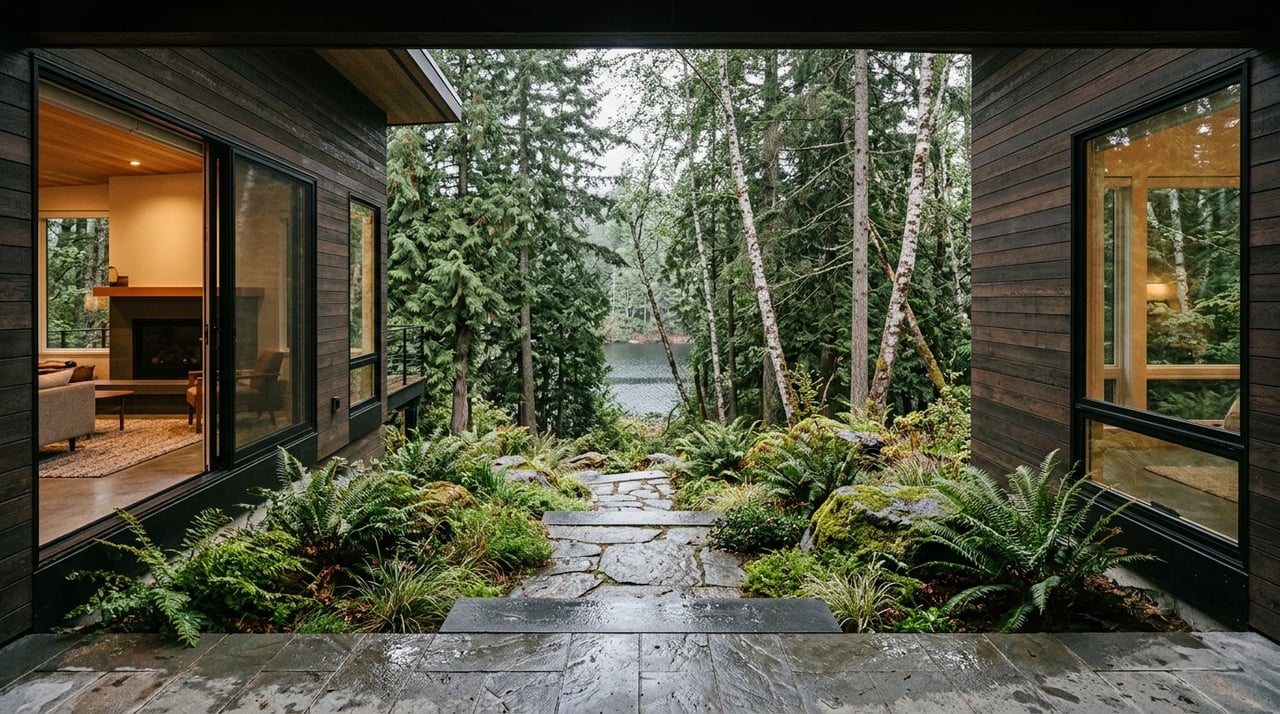
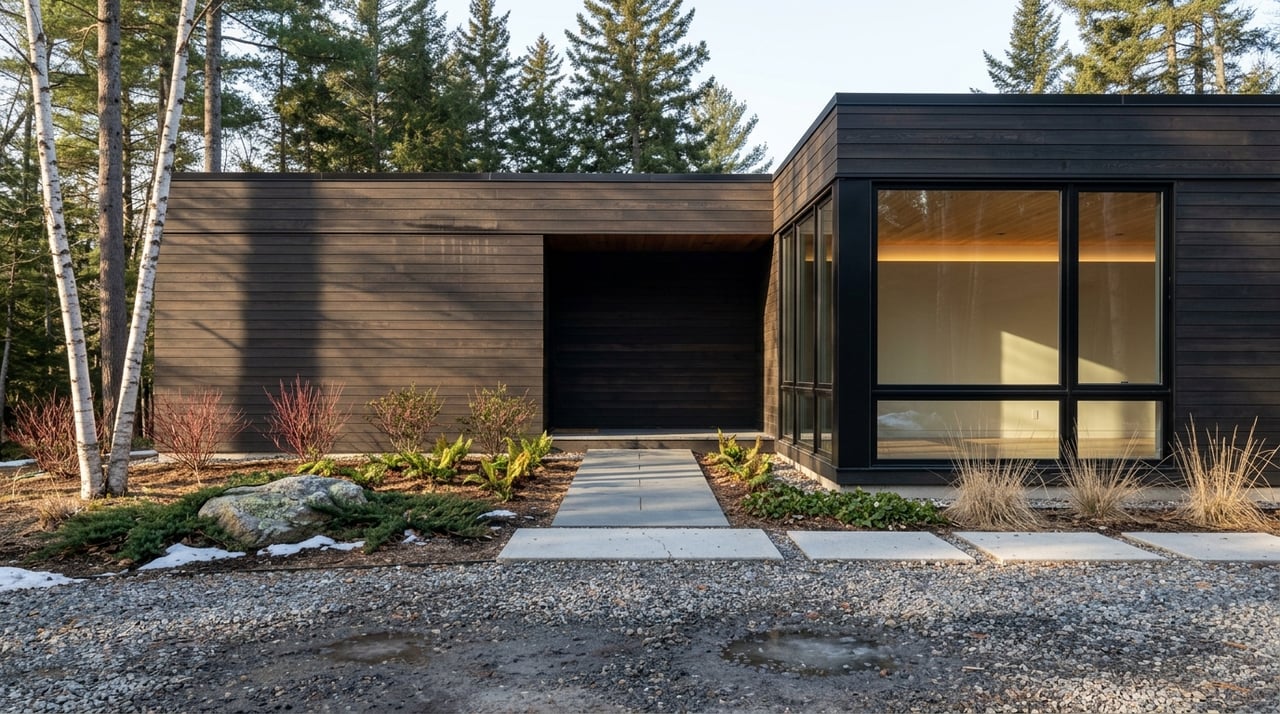
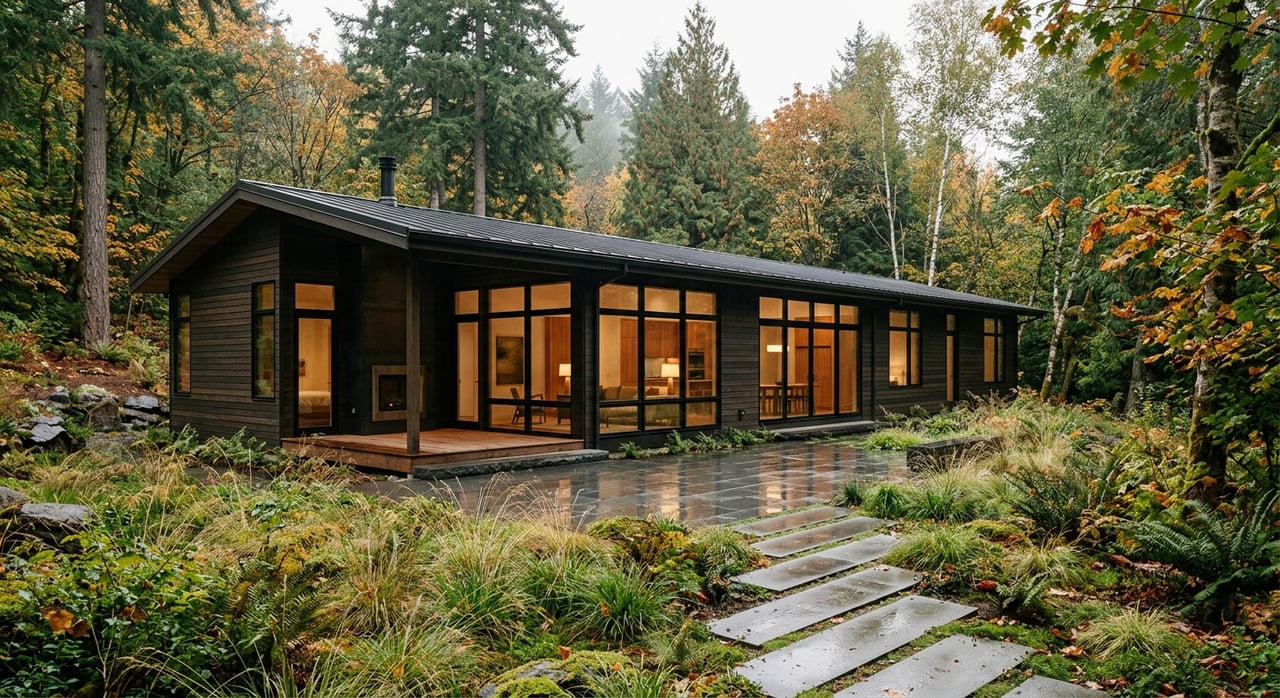
At the other end of the spectrum, many newer Muskoka homes lean contemporary. These lakehouses often use low-slung forms, large expanses of glazing, generous overhangs, and a restrained palette of cedar, fir, granite, and stone.
Well-known Muskoka examples show a consistent pattern. The homes feel modern, but the strongest designs still stay grounded in the site through natural materials, low visual mass, and careful orientation.
This style appeals to buyers who want clean lines and stronger view capture without losing the warmth that makes a lake property feel inviting. Large windows, sliding glass doors, and open living spaces can create a closer connection to the water and tree line.
Some newer materials also help reduce maintenance. For example, one Lake Joseph project featured a charred cedar facade noted for its weather resistance and low-maintenance performance.
Key features to notice
- Low-slung or gently gabled rooflines
- Floor-to-ceiling glass
- Deep roof overhangs
- Cedar, fir, granite, and stone finishes
- Dark or naturally aging wood cladding
- Strong indoor-outdoor flow
Boathouse-forward compounds
Another defining Muskoka pattern is the boathouse-centered compound. Instead of one single structure, these properties may include a main cottage, guest cottage, garage, and boathouse that developed over time.
Architecturally, the boathouse often plays a bigger role here than it would in many other waterfront markets. Published Muskoka examples include simple slips and storage areas, but also porches, terraces, and upper-level spaces in more elaborate compositions.
For buyers, this layout can be appealing because it creates a layered waterfront experience. The shoreline becomes an active part of the property, not just a backdrop.
Still, it is important to separate design culture from municipal rules. In the Township of Muskoka Lakes, boathouses are tightly regulated, and applications may require permits, dock inspection, and structural review.
What local rules mean for boathouses
The Township of Muskoka Lakes official plan allows certain single-storey boathouses only on larger waterfront lots and under specific frontage, length, and setback conditions. The plan also states that the bottom floor is intended primarily for boat and equipment storage, with no cooking or sleeping.
That matters if you are evaluating an existing property or thinking about future changes. A boathouse may be a major lifestyle feature, but it is also an area where local approvals and use restrictions deserve close attention.
Renovated mid-century cottages and hybrids
Many Muskoka properties do not fit neatly into one style box. Instead, they blend old and new through renovation, expansion, and winterization.
This is especially common on waterfront lots where today’s setbacks may not allow a full rebuild in the same location. In those cases, owners often rework the existing structure instead, keeping the footprint while improving insulation, windows, mechanical systems, and overall comfort.
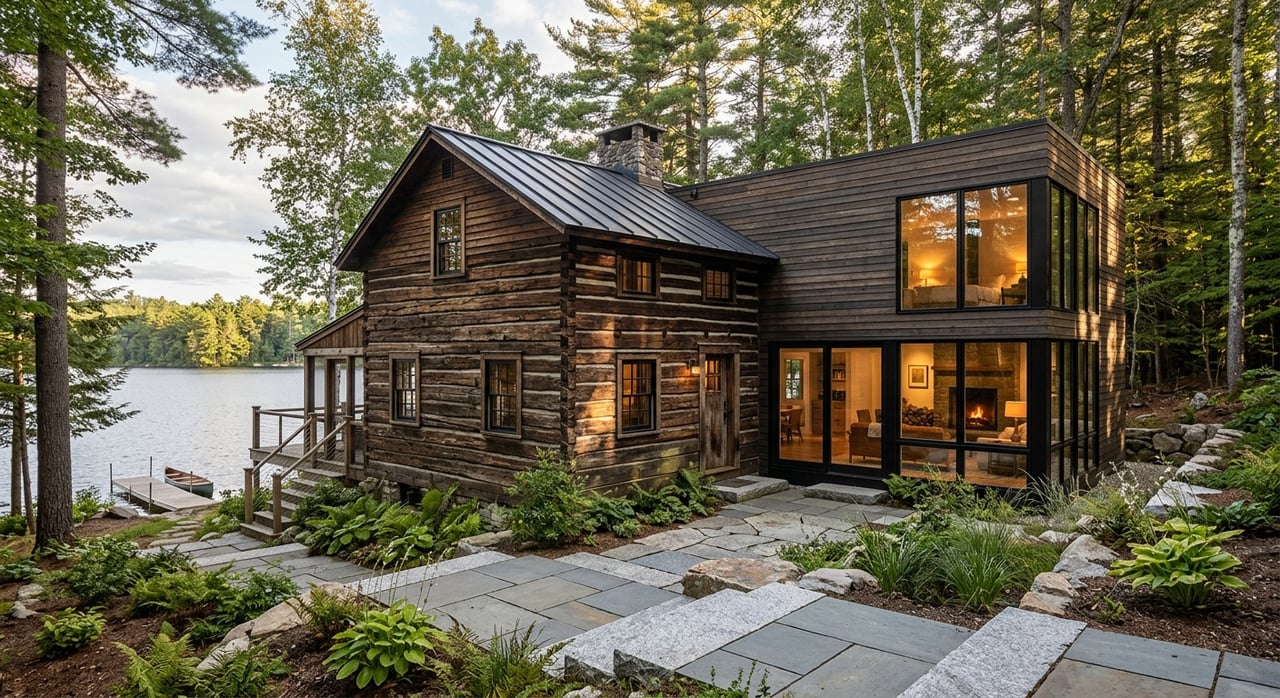
That approach has helped create a hybrid Muskoka look. You might see an older cottage shell paired with cleaner lines, larger windows, updated cladding, or more open interior planning.
Mid-century influences also show up in many of these homes. Typical cues include low or flat rooflines, open plans, natural materials, deep overhangs, and large windows that frame the lake.
Why hybrids make sense in Muskoka
Hybrid homes often reflect the reality of the market better than pure style categories do. They preserve shoreline placement or legacy character while bringing the property closer to modern expectations for comfort and seasonal flexibility.
For buyers, that can mean a more livable cottage without losing the personality that drew people to Muskoka in the first place. For sellers, it can also help explain why thoughtful updates matter when presenting an older waterfront property.
The role of the Muskoka room
One of the most recognizable local features is the Muskoka room. In common local use, it usually means a screened porch or screened-in outdoor room.
This space matters because Muskoka living is strongly tied to the seasons. A screened room extends the useful part of the year, creates a more comfortable setting for evenings, and helps reduce the impact of bugs without cutting you off from the outdoors.
In architectural terms, it also acts as a bridge. It softens the line between house and landscape, which is one reason it appears across traditional cottages, renovated properties, and newer builds alike.
What architecture can tell you as a buyer
When you tour homes around Muskoka Lakes, style is about more than looks. It often gives you clues about maintenance, seasonal comfort, and how the property is meant to be used.
A wood-heavy cottage may offer warmth, texture, and classic local character, but it may also ask more of you over time. A more contemporary home may deliver broader views and lower-maintenance materials, but its success often depends on how well it sits within the site.
It also helps to look at the building envelope. In many local renovations, insulation, efficient windows, and updated systems are just as important as the visible design language.
What architecture can tell you as a seller
If you are preparing to sell, understanding your home’s architectural identity can improve how it is presented. Buyers in Muskoka are often responding to a lifestyle story as much as square footage.
A classic timber cottage, a boathouse compound, a renovated mid-century retreat, and a contemporary glass-and-wood lakehouse each speak to a different kind of buyer experience. The strongest marketing usually highlights those distinctions clearly, with attention to materials, setting, shoreline orientation, and seasonal use.
That is especially true for architecturally interesting waterfront homes. Design details, renovation choices, and site response can all help shape perceived value when they are presented with clarity.
Why Muskoka styles keep evolving
Muskoka architecture is best understood as a continuum rather than a fixed set of categories. On one end, you have log and timber cottages rooted in early building traditions. On the other, you have contemporary lakehouses that use glass, cedar, and stone in a quieter, more modern vocabulary.
Between those points, you will find boathouse compounds, Ontario Cottage influences, mid-century lines, and carefully updated legacy properties. What ties them together is not one exact style, but a shared response to the land, the water, and the experience of being here.
If you are exploring the Muskoka market, that perspective can help you see beyond trends. The most compelling homes usually feel like they belong exactly where they are.
If you are considering a purchase or preparing to position a distinctive cottage for sale, working with someone who understands both design and waterfront context can make the process much clearer. Connect with Ryan Harkin to explore Muskoka properties through a more informed, design-aware lens.
FAQs
What architectural styles are most common around Muskoka Lakes?
- The most visible styles include classic log and timber cottages, contemporary glass-and-wood lakehouses, boathouse-forward compounds, and renovated mid-century or hybrid cottages.
What is a Muskoka room in cottage design?
- A Muskoka room usually refers to a screened porch or screened-in outdoor room designed to extend seasonal use and make outdoor living more comfortable.
Are boathouses in Muskoka only used for storage?
- Not always in design terms, since published examples range from simple storage structures to more elaborate waterfront buildings, but the Township of Muskoka Lakes closely regulates boathouse size, approvals, and permitted use.
Why do many Muskoka cottages mix traditional and modern features?
- Many local properties blend old and new because builders and owners often adapt existing cottages, preserve older footprints, and combine rustic materials with updated glazing, insulation, and layouts.
What should buyers look for beyond style in a Muskoka cottage?
- Along with architecture, buyers should pay attention to maintenance needs, insulation, windows, seasonal comfort, shoreline orientation, and any local rules that affect structures like boathouses.